

If you need any helps, please feel free to contact us.

There is a unique kind of silence in the C-suite. It appears after a high-stakes board meeting, before a major restructuring announcement, or in the moment when deciding where AI should intervene in your workforce. For senior executives and high-potential managers, the challenge is not a lack of information, it is the sheer velocity of it.
In today’s fast-paced market, leadership is no longer about having all the right answers. It is about having the clarity and vision to ask the right questions. But who do you speak to openly when everyone looks to you for direction? This is why 1-1 Executive Coaching has evolved into a strategic advantage. It is the one space where you can remove your professional armor and engage in honest and meaningful leadership work.
For many high-potential managers, the transition to senior leadership feels overwhelming. You were promoted because you excelled in your field, whether in finance, operations, marketing, or technology. However, the skills that made you a strong functional expert are not the same skills required to become an exceptional leader.
1-1 coaching focuses on this shift. You move from being a doer to becoming an influencer. You learn how to delegate effectively, motivate your team, and lead with calm confidence and emotional control. Your perspective shifts from short-term targets to long-term vision.
As AI continues to automate technical management tasks such as data analysis, scheduling, and basic strategy, the human side of leadership becomes more valuable than ever. Skills like emotional intelligence, adaptability, ethical judgment, and the ability to inspire a team cannot be automated.
In our coaching sessions, we focus on strengthening these human capabilities. You will learn how to trust your intuition when data is unclear, create an environment where your team feels safe to innovate, and use conflict as a tool for growth rather than disruption.
Group workshops have their place, but real breakthroughs for senior leaders happen in private. Generic advice does not address your unique personality or the blind spots that others may hesitate to point out.
A dedicated executive coach acts as your trusted partner. This relationship is built on three key pillars:
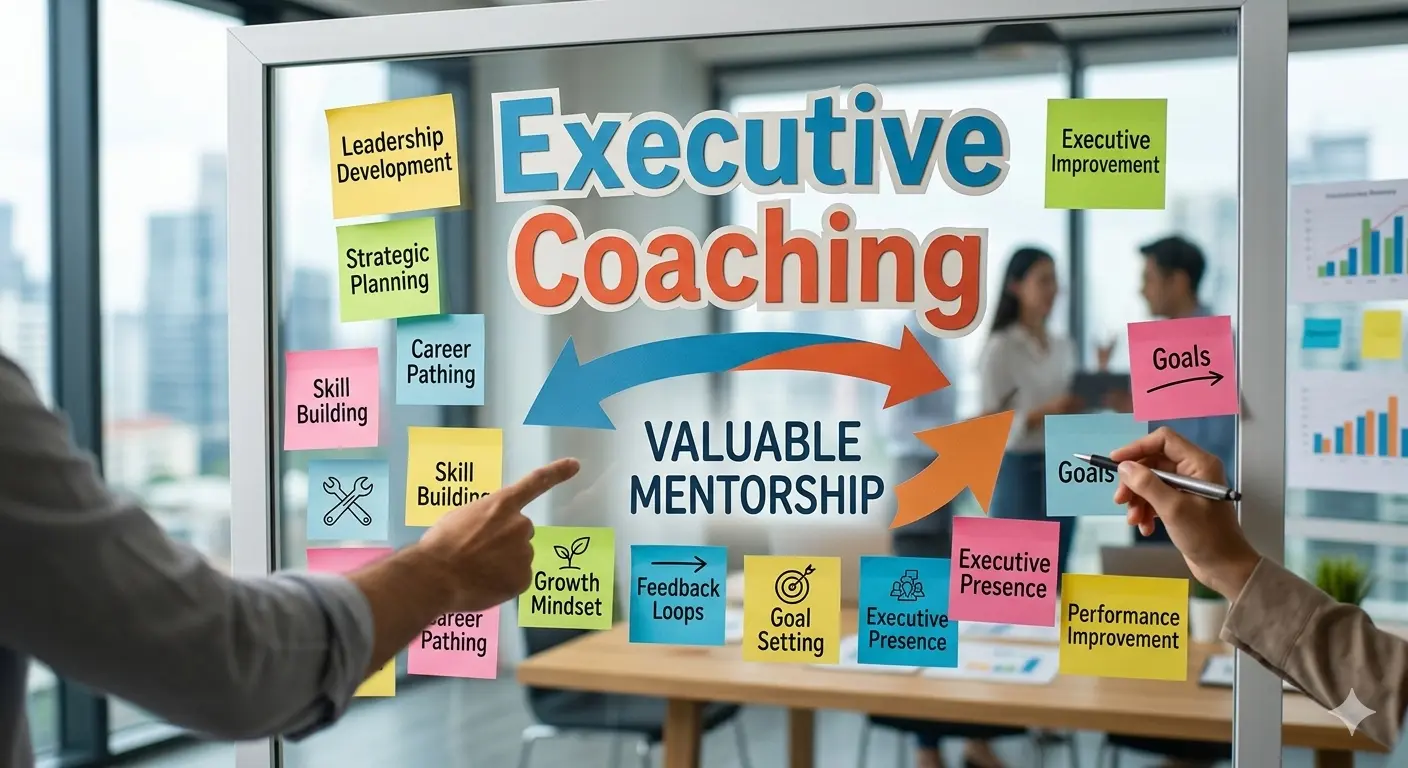
Senior leadership roles often come with an always-on expectation. The boundary between work and personal life becomes blurred. High performers do not burn out because they cannot do the work. They burn out because they cannot stop doing it.
Executive coaching helps you manage your energy effectively. You learn how to say a high-quality no to distractions and a proactive yes to what truly matters. You also learn how to apply principles like Pareto and Parkinson’s Law in a practical way.
Executive leadership development is not about fixing something that is broken. It is about optimizing what is already working. It is for leaders who know they have more potential but are unsure how to access it.
The most successful individuals in the world work with coaches. This is not a weakness. It is a strategic decision to gain perspective. You cannot see the full picture when you are inside the frame. A coach helps you step outside and see clearly.


No. Although performance gaps can be picked up as part of the work we do, the most actual work is in continuously improving from where you are today from a leadership perspective. We set clear goals on how we want to climbing the corporate ladder and how to navigate through organizational politics. Just like a elite athelete hires a specialist to improve milliseconds in his performance, an executive coach help you stand out of the potential next set of leaders who are looking for the seat on the round table.
These roles seem quite confusing however the difference is huge. A mentor would be someone who has excelled in the specialized field of where you are heading. For example if you are a Project Manager, your mentor might be a Program or Portfolio Manager. Now these mentors generally meet you once in 3 months and just give you high level advice on what they used to do in their time. Although that advice is beneficial it does not do much if it just stays as advice with no action plan to execute it. An executive coach on the other hand will sit down and define specific goals. He would then every 1-2 weeks follow up and see the actions that were agreed are being progressed or not. Thus the approach is tailored and you are accountable.
Normally the sessions are conducted once a fortnight with 60-90 mins per session. To see the results would normally take 4-6 months. And as the goals and set at the onset, it is easier to do a periodic retro and re-adjust as we proceed.
If all you are getting is a "Yes Man", someone who just agrees to what you say then be aware. A good executive coach will move you out of your comfort zone and challenge your limiting beliefs. After the first session, you should have atleast 1-2 strategies that you can straight away apply to your day to day work.
Considering you are in the mid level role getting, spending time on this self development activity will not just help you in growing in your career, it will also teach you that as you climb the corporate ladder "less is more". My freeing up time from seeming urgent and non important things, you would be more focused on important things that are not urgent.
Do not overthink it. If your intuition is guiding you toward growth, act now before your mind creates reasons to stay comfortable. Your next level as a leader is waiting.
Clear, grounded coaching for personal growth, relationships, career development, leadership, and wellbeing.
© 2026 Coach Studio. All rights reserved.